


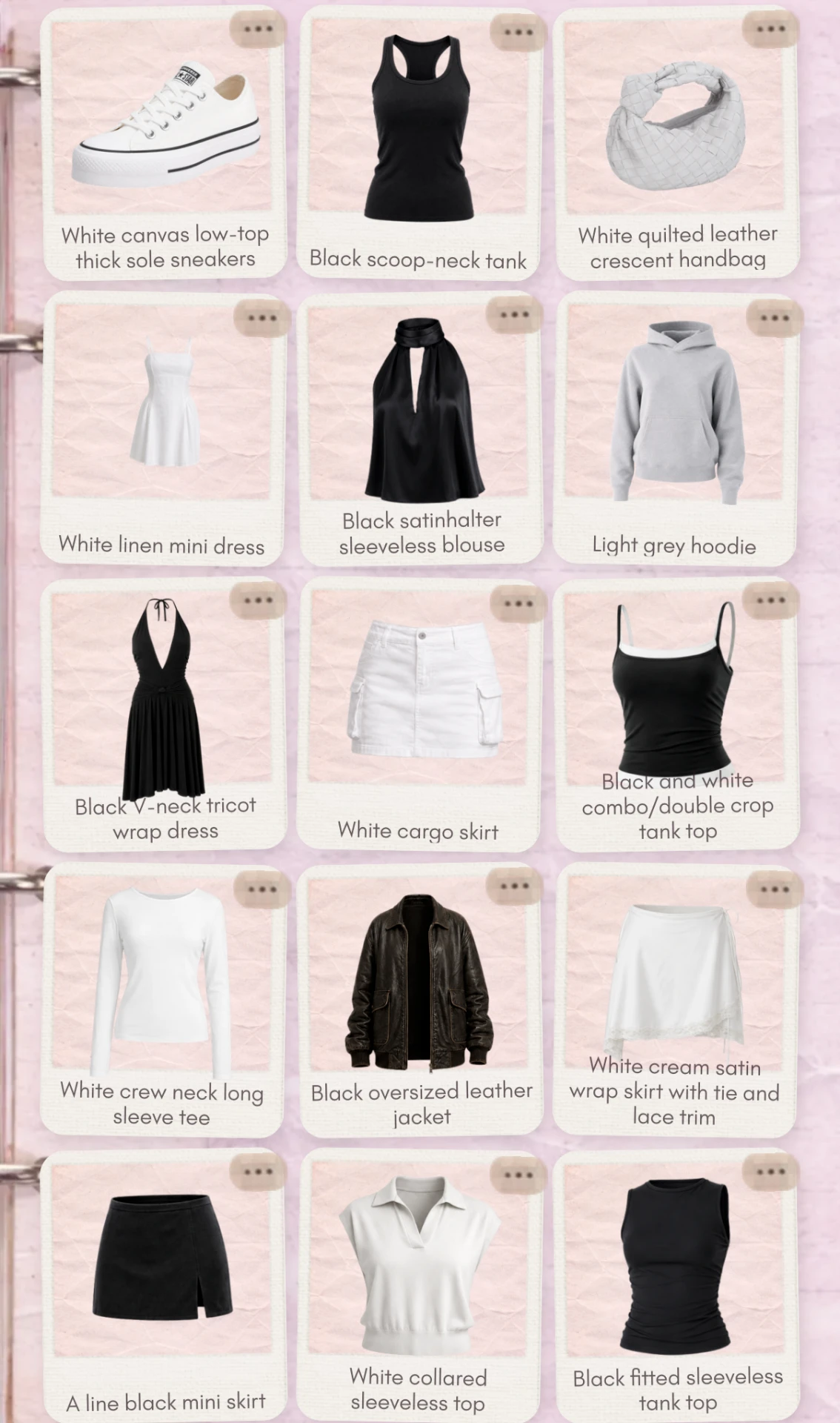
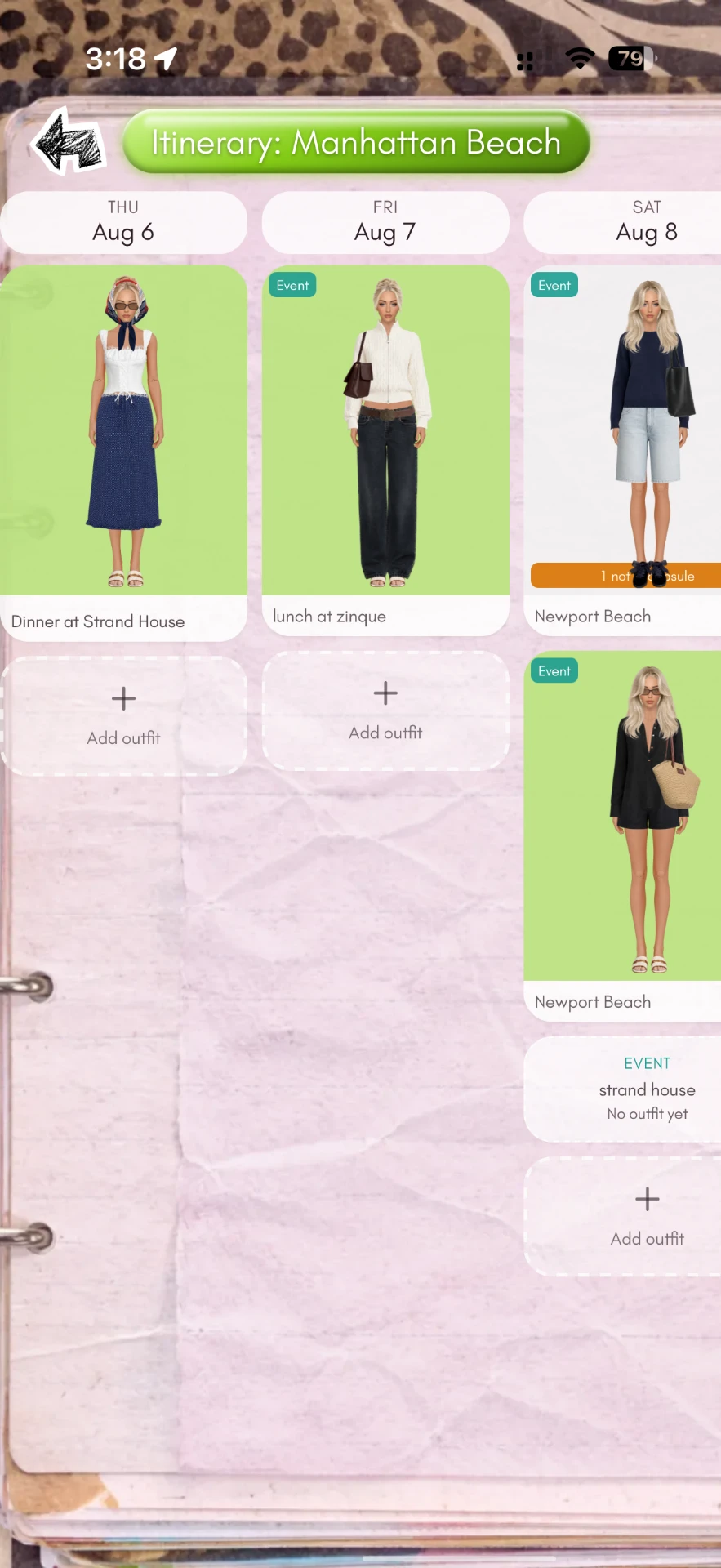
A travel capsule is a small set of clothes chosen because they combine - a handful of pieces that between them cover everything the trip involves. Building one is not really a packing technique. It is a decision made before the case is open, working backwards from what you are actually going to do, and the reason most of us overpack is that we make it in the wrong order: clothes first, days later, in a pile on the bed at eleven at night.
Done the other way round, the packing list stops being a guess. Here is the order that works.
You pack items, but you wear outfits
That is the whole problem in one line. A suitcase is filled one garment at a time and emptied one outfit at a time, and nothing in between checks that the second is possible from the first.
Nobody stands in a hotel room wanting a top. They want the black top with the linen trousers, and the linen trousers are at home, because at eleven at night the black jeans looked more generally useful. The pieces that make it into the bag are the ones that seem individually justifiable - the just-in-case cardigan, the second pair of jeans - rather than the ones that are load-bearing in an outfit anyone has actually pictured. The result is a heavy bag and, by day three, nothing to wear.
Everything below is a way of making that check before you leave rather than after you arrive.
Start from the days, not from the wardrobe
Write out the days and put next to each one what you are doing. Not "Friday" but "Friday: beach in the afternoon, dinner somewhere with a dress code". It takes five minutes and it gives you a number.
The number is not the number of days. It is the number of kinds of day, and it is almost always smaller than you expect. A week away is rarely seven distinct situations; it is usually something like three beach days, two dinners, one travel day and one that could go either way. That is four outfits, not seven, and three of them repeat.
Two things fall out of this immediately. The first is that repeating an outfit on holiday is not a failure - nobody on the trip is keeping count, and the photographs are of different places. The second is that shoes are the real constraint. They are the heaviest thing in the bag and the least willing to combine, so they should be decided first and they should be decided ruthlessly: one pair you can walk all day in, one pair for the dinners, and a third only if the trip genuinely has a third kind of evening.
Then do the arithmetic
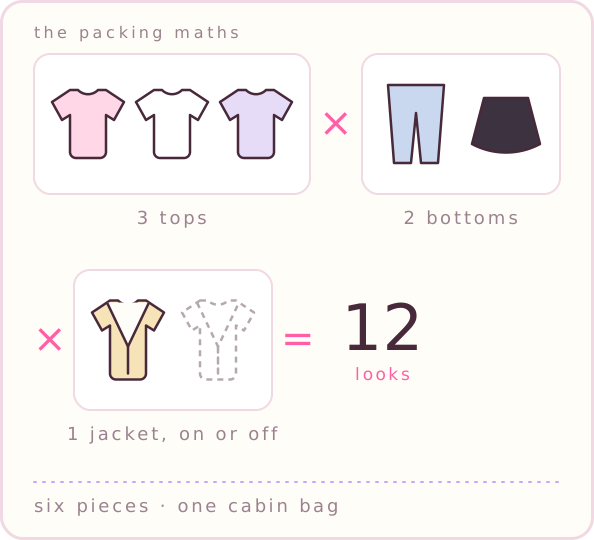
Three tops, two bottoms and one jacket is six pieces and twelve looks. That is not a trick - it is just multiplication, and it is why a capsule can be small without being repetitive.
The whole thing rests on one condition, though: every top has to work with every bottom. The moment one top only goes with one skirt, you are not carrying a system any more, you are carrying an outfit plus some spares. A colour that sits alongside everything else you are bringing is doing more work than a colour you love on its own.
If you have already read how to build a capsule wardrobe from clothes you own, this is the same exercise with a deadline attached, which makes it considerably easier - a trip has a fixed length and a known weather forecast, and neither of those is true of your life in general.
If you cannot name two outfits a piece belongs to, it is not packed. It is just travelling.
Check the outfits exist before you leave
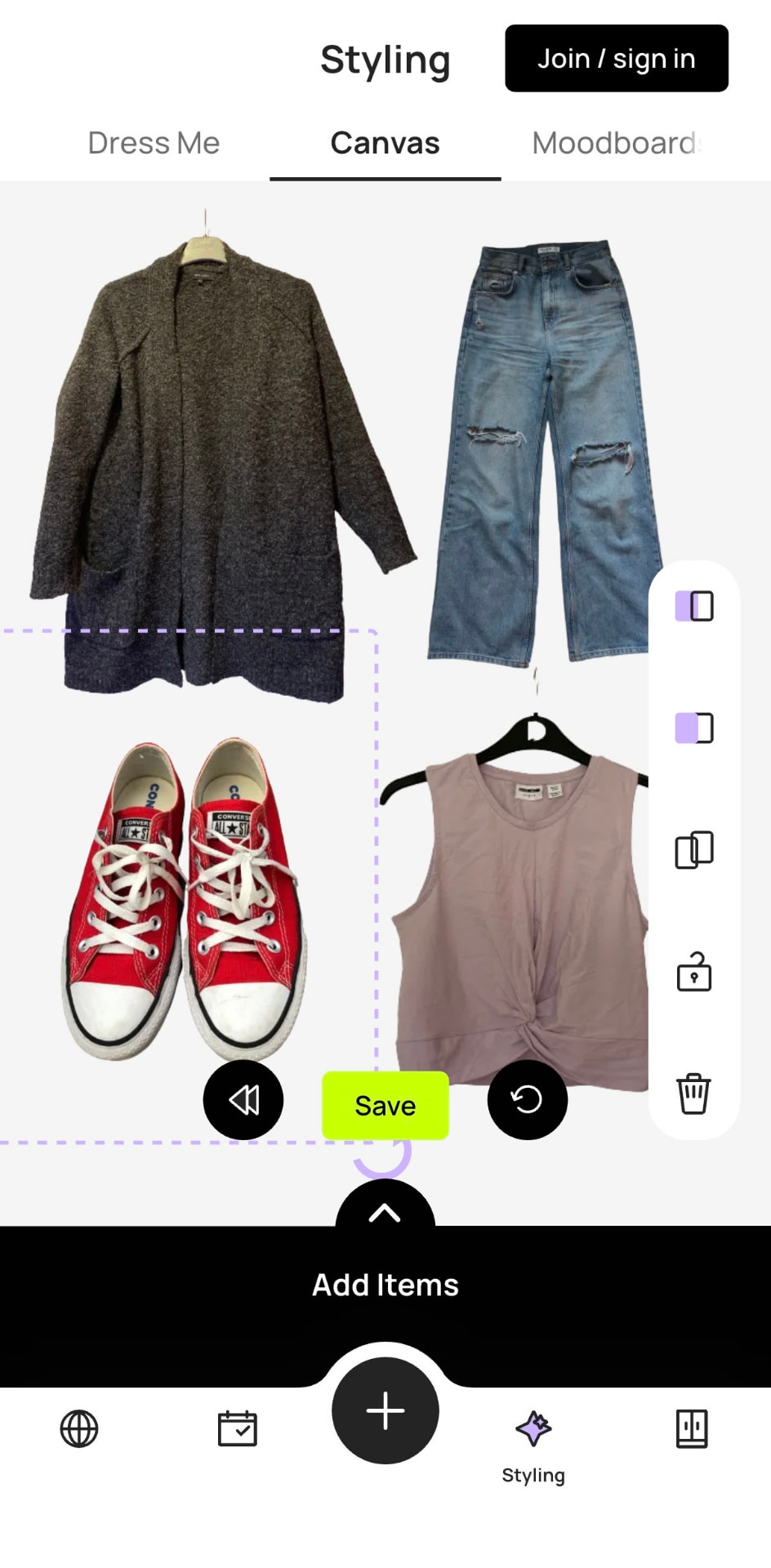
The step everyone skips is verification. It is one thing to believe the cream top goes with the denim skirt and another to look at the two of them together, and the gap between those is where the day-three problem lives.
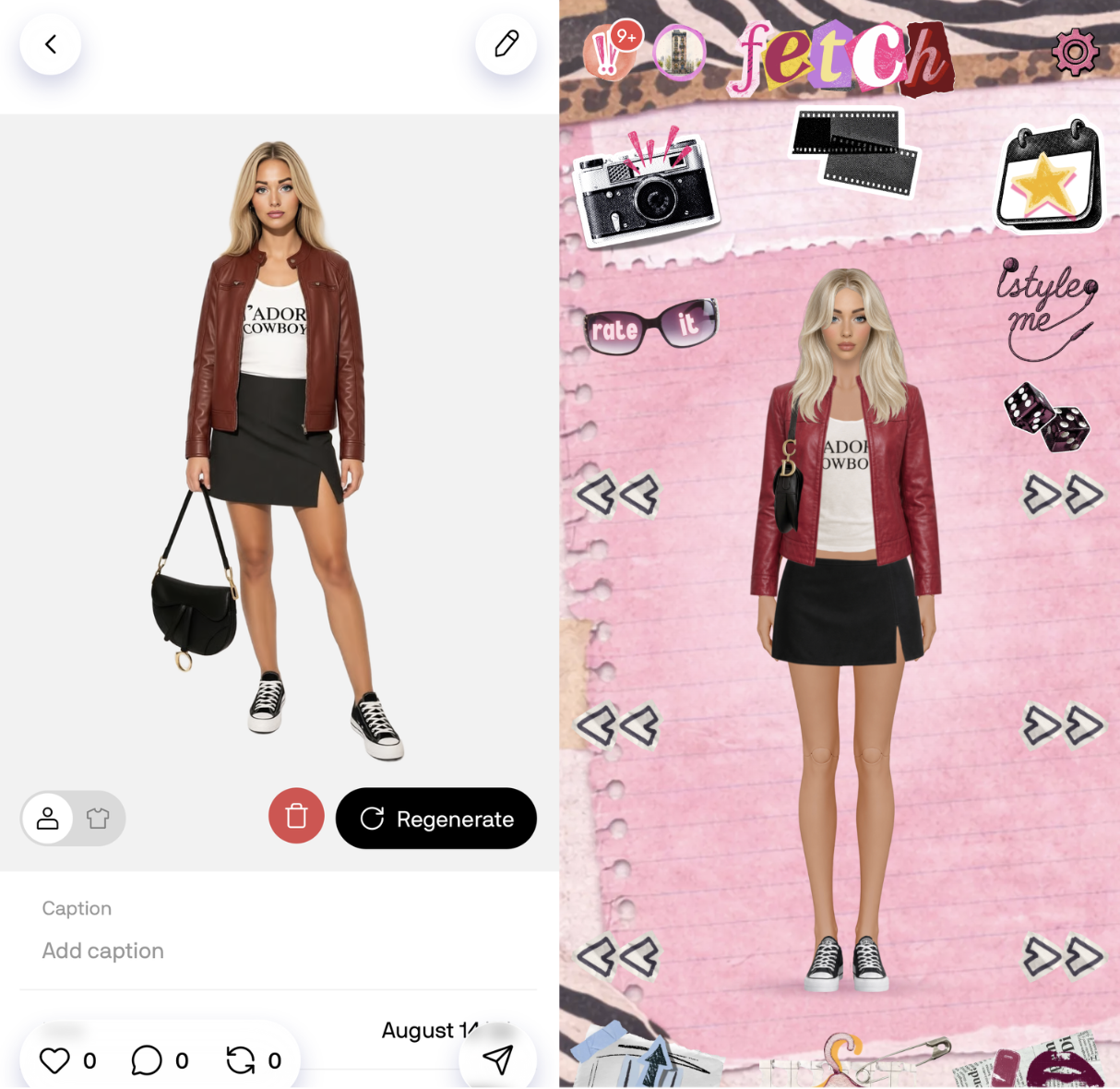
This is the part a digital wardrobe is genuinely good at, because the clothes are already photographed and you can put them side by side without unpacking anything. In Fetch the outfits sit in albums, so the ones you have already built and liked are there to be pulled from rather than invented on the spot.
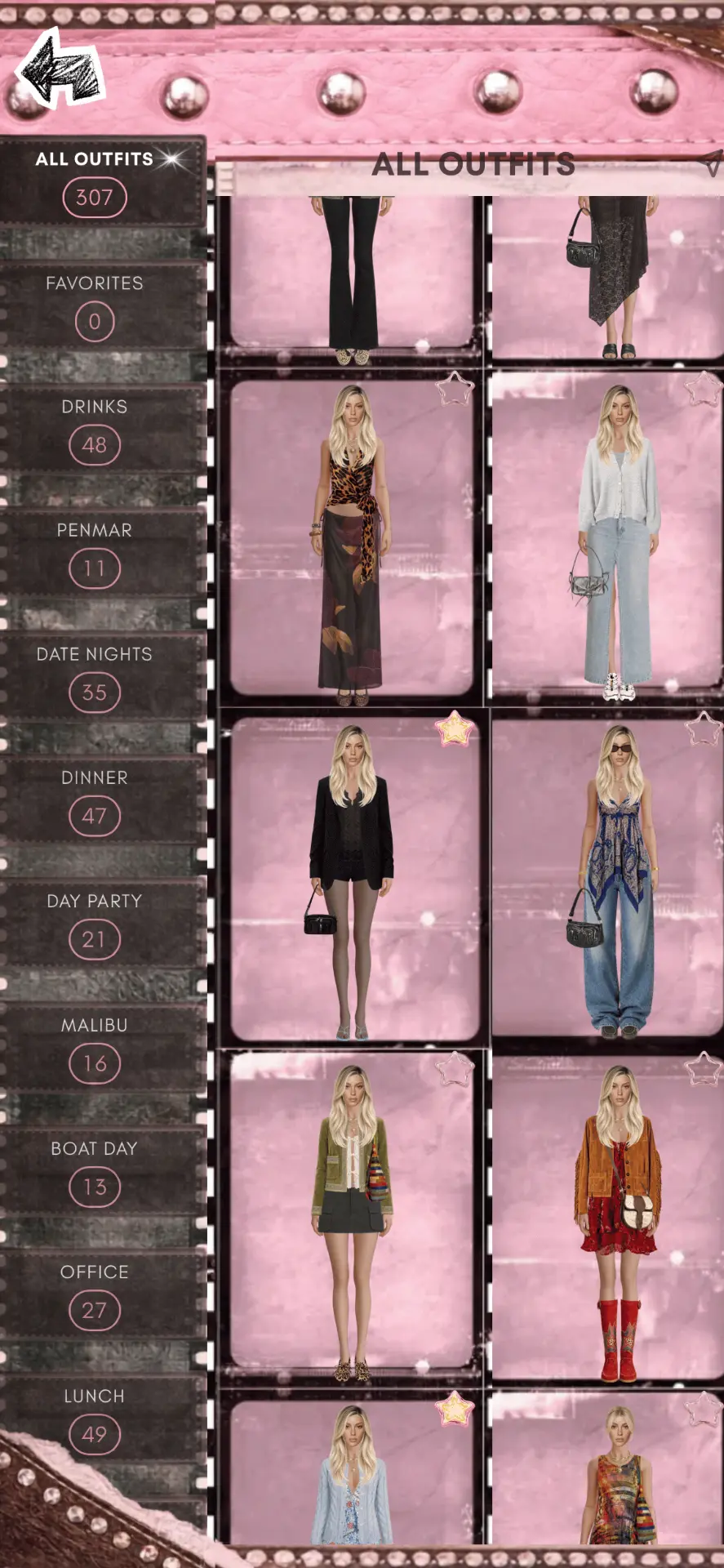
Most people's saved outfits turn out to be trip-shaped already. Albums called boat day and dinner are, functionally, a capsule waiting to be noticed - the work of deciding what goes together was done weeks ago, on a normal evening, with no suitcase involved.
Build the capsule, then let the list fall out of it
Fetch has a whole mode for this. You make a trip with its dates, and from then on there are two ways for a piece to join the capsule - the in-app name is your vacay wardrobe - either you tap the pack toggle on the item itself, or you plan a saved outfit onto a day of the trip, which brings that outfit's pieces in with it.
The second route is the one that matters, because it enforces the order this whole article is arguing for. You are not choosing clothes and hoping they add up to outfits. You are choosing outfits, and the clothes follow. The itinerary will also tell you when a look you have planned includes something you have not actually packed, which is the exact mistake that is otherwise only discovered in a hotel room.
Once the trip is running, the app filters your closet and your outfits down to the capsule, so for the length of the trip you are planning against what is in the bag rather than against your whole wardrobe.
The packing list is the last thing you make, not the first
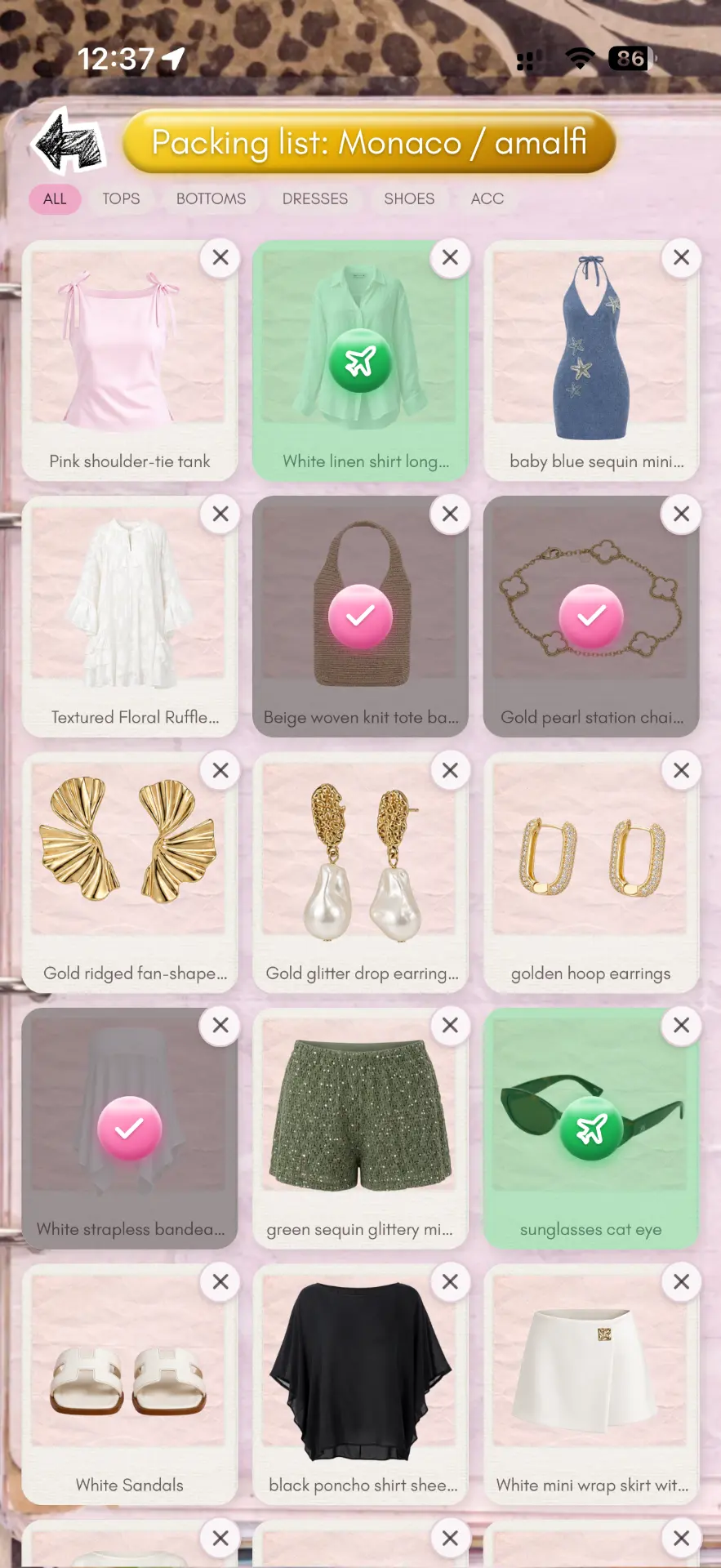
By this point the list is just the capsule shown as a checklist, and packing becomes clerical work rather than decision-making. Each card cycles through three states as you go: unpacked, packed, and to wear on the plane.
That third state sounds like a detail and is not. What you travel in is the one outfit that is part of the plan but never in the case, so it is the thing most likely to be double-packed or forgotten entirely - and it is usually the bulkiest thing you own, which is why it should be on your body rather than eating half the bag.
If you are going with other people
Group trips have their own failure mode, which is four people independently packing the same going-out top and nobody bringing a jacket.
A trip in Fetch can have other people in it, and there is a switch that makes everyone's packed clothes visible in everyone else's trip closet, so the group can plan against one shared pool. A friend's capsule shows up as what they are bringing, without their packing progress attached - you can see the clothes, not whether they have got round to folding them. You can also generate an image of the group's dolls standing together for a given day, which settles the "are we dressing up tonight" question before anyone has to get changed twice.
What this will not do for you
Worth being straight about the limits. Fetch does not generate a capsule for you, does not tell you what to buy, and has no opinion about how many pieces is correct. It makes the wardrobe visible and keeps the plan honest; the choosing is still yours.
It is also an iPhone app, and the clothes have to be photographed and processed before any of this works, which takes a bit of time up front. That is not a thing to start the night before a flight. If you are new to the idea, what a digital wardrobe actually is covers the setup cost honestly.
The upside is that you only build the wardrobe once, and every trip after the first one starts from clothes that are already in there.
The short version
Days first, then occasions, then shoes, then the arithmetic. Check the outfits exist as outfits rather than as good intentions. Write the list last, and wear the bulkiest thing on the plane.
The suitcase is the final step, and by then there is nothing left to decide.